

NOS SITES DE PLONGÉE

Comment nous choisissons nos sites de plongée pour la journée
Les clients nous demandent souvent, lors de leur visite, quels sites de plongée nous proposons ou s'ils peuvent réserver une sortie vers un site de plongée en particulier. Bien que nous disposions d'un total de 20 sites de plongée, dont 5 sont accessibles depuis le rivage et 15 depuis un bateau, nous ne pouvons jamais promettre ni prédire un site de plongée spécifique.
En Méditerranée, le temps change beaucoup et n'est pas aussi prévisible que dans les endroits qui proposent un programme de plongée fixe. C'est pourquoi nous évaluons toujours les conditions météorologiques le matin afin de garantir des conditions optimales et sûres à nos clients et à notre équipage. Nous sommes toutefois toujours heureux d'entendre tes souhaits et essayons de les exaucer dans la mesure du possible !
Shinaria
Si tu as déjà plongé avec Dive2gether, il y a de fortes chances que tu aies passé un moment agréable à Shinaria Beach.
La baie est protégée du vent du nord et offre une grande variété de sites pour passer plusieurs jours à plonger. Que tu fasses du snorkeling, que tu prennes tes premières bouffées d'air sous l'eau, que tu fasses des plongées d'entraînement depuis les différentes zones de sable à différentes profondeurs ou que tu admires les immenses canyons et les tombants, ce site de plongée a quelque chose à offrir à tout le monde. Lorsque les conditions météorologiques le permettent, les plongeurs expérimentés peuvent visiter une magnifique caverne. Presque toutes les familles de poissons peuvent être observées à Shinaria, nos préférés étant les adorables poissons-globe curieux que l'on trouve toujours en train de chercher de la nourriture dans le sable.
Profondeur maximale: 27 mètres.
Installations: transats (payants), douches, toilettes, tavernes et parking étroit.

Souda
Cette vaste plage est protégée des courants marins venant de l'ouest et correspondrait à un certain lieu appelé Foinikas décrit dans l'Ancien Testament. Curieux ? Tu peux visiter les vieilles ruines situées à l'intérieur des terres, entourées de palmiers (appelés Foinikas en grec) !
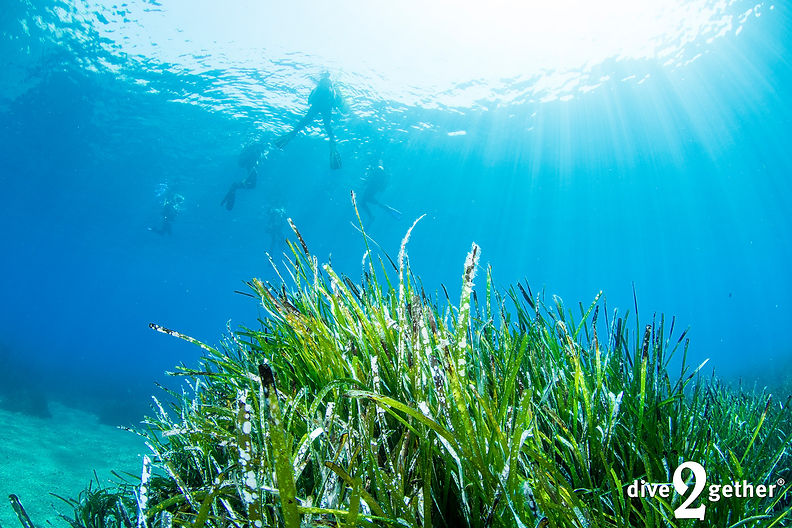
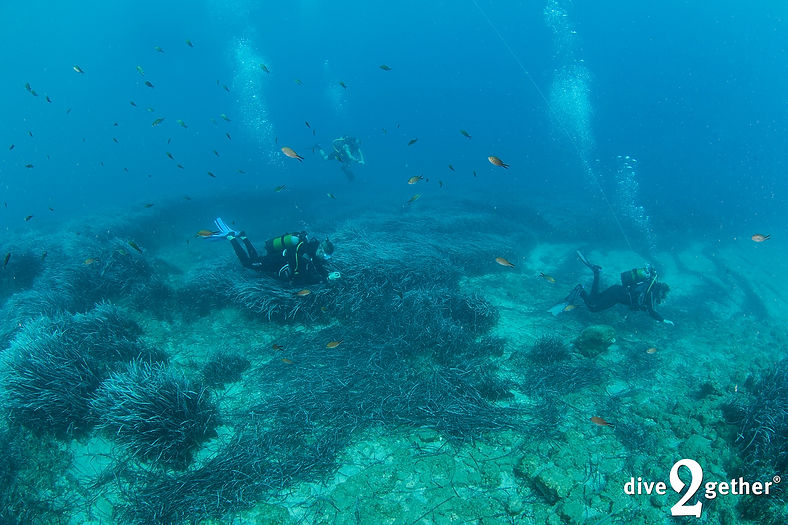
Bien que la majeure partie de la baie soit une zone sablonneuse en pente douce, on trouve différentes formations rocheuses des deux côtés de la baie. Il y a de grandes prairies et des murs d'herbes marines. Nous avons commencé à y installer des tapis d'herbes marines où nous menons des recherches et plantons de nouveaux fragments de Posidonia. Tu peux même participer à nos efforts de reboisement des herbes marines dans le cadre de nos activités de biologie marine ! Ce site de plongée est excellent pour observer différentes espèces marines et il est possible d'y trouver des espèces plus rares telles que l'hippocampe, le syngnathe à nez large ou la raie pastenague. La nuit, tu pourras voir des pieuvres, des seiches ou des murènes à la recherche de leur dîner.
Profondeur maximale: 10 mètres
Installations: transats (payants), douches, toilettes, bar de plage, taverne, vestiaires et grand parking
Ammoudi
Ammoudi signifie « plage de sable » en grec, il n'est donc pas surprenant que l'on trouve de nombreux Ammoudis à travers le pays.
On y trouve une grande diversité de zones sablonneuses, de formations rocheuses avec de magnifiques fissures dans la paroi et des parcelles d'herbes marines. La grotte ensoleillée, qui tire son nom du rideau de lumière qui brille à l'entrée, est particulièrement belle.
Outre la vie marine habituelle que l'on peut observer sur n'importe quel site de plongée côtier, il est parfois possible d'apercevoir des calmars européens dans la baie. Le plateau rocheux peu profond au milieu de la baie est très apprécié des blennies de grande taille ainsi que des petits poissons scorpions.
Pendant ta pause déjeuner, tu pourras déguster le meilleur kebab pita de la Kantina locale ! Ammoudi est souvent fréquenté les jours de vent fort du nord et est également très apprécié pour la plongée de nuit.
Profondeur maximale: 9 mètres.
Installations: transats (payants), douches, toilettes au camping, cantina et grand parking.


Damnoni Old Harbor
Le vieux port était autrefois utilisé pour le transport de marchandises avant la construction des routes traversant les gorges reliant le nord et le sud. Aujourd'hui, il n'est plus utilisé que par quelques bateaux de pêcheurs et les anciens entrepôts ont été transformés en magnifiques maisons de vacances.
Ce trésor ne peut être visité qu'en basse saison et offre des sites de plongée fantastiques ! La basse saison s'accompagne de températures plus froides, ce qui en fait la période idéale pour observer les langoustes et les langoustes espagnoles.
La baie de Damnoni offre un paysage magnifique. L'une de ses caractéristiques uniques est ses plateaux calcaires. Les plongeurs apprécieront ce site de plongée très diversifié, avec différentes profondeurs et d'incroyables canyons plus loin dans la baie.
Profondeur maximale: 25 mètres.
Installations: tuyau d'arrosage d'eau douce, possibilité de déjeuner en voiture pour les pauses toilettes. Le parking se trouve au-dessus du port.
Bali / Karavostasi
À ne pas confondre avec l'île populaire d'Indonésie, la Crète possède son propre Bali ! Ce site de plongée est situé à une heure de route de Plakias, sur la côte nord de l'île. En raison du trajet plus long et donc du programme prolongé, Bali est visité lorsque la plongée n'est pas possible sur la côte sud. Mais ce n'est certainement pas un mauvais choix comme plan B !
Cette jolie petite baie est un terrain de jeu idéal pour les plongeurs. Les poissons se comportent un peu différemment, car ils s'attendent à ce que vous leur donniez à manger (ne nourrissez jamais les animaux sauvages !). Des récifs artificiels ont été construits et tu pourrais même tomber sur une caméra sous-marine fixe qui te filme en direct. Une raison de plus pour être hydrodynamique et avoir une flottabilité parfaite ! C'est une expérience amusante de plonger dans cet endroit qui offre quelque chose pour tous les niveaux !
Profondeur maximale: 20 mètres.
Installations: transats, douches, toilettes, taverne et parking limité.


Duck Rock
Bien que Duck Rock ne soit qu'un petit rocher en forme de canard en caoutchouc, le site de plongée en dessous est immense et très intéressant. Descendez le long de la ligne d'amarrage et tu seras directement à 12 mètres de profondeur, d'où tu pourras suivre un mur sur ta gauche pour visiter l'entrée d'une grotte. Cette grotte est trop étroite pour y entrer, mais tu verras beaucoup de vie autour des entrées et des sorties. De là, tu peux visiter un grand surplomb à environ 25 mètres ou revenir par une gorge. Selon l'itinéraire choisi, tu peux soit suivre le mur côté mer à une profondeur d'environ 12-14 mètres, soit faire demi-tour sur le plateau qui t'amènera progressivement au niveau de la palier de sécurité. Sur le chemin du retour vers le bateau, tu passeras devant une autre fissure où tu pourras trouver des nudibranches.
Profondeur maximale: plus de 30 mètres.
Palier de sécurité: profite des eaux peu profondes et de la belle lumière du soleil autour de Duck Rock et nage les dernières minutes vers le bateau.
Black Rock
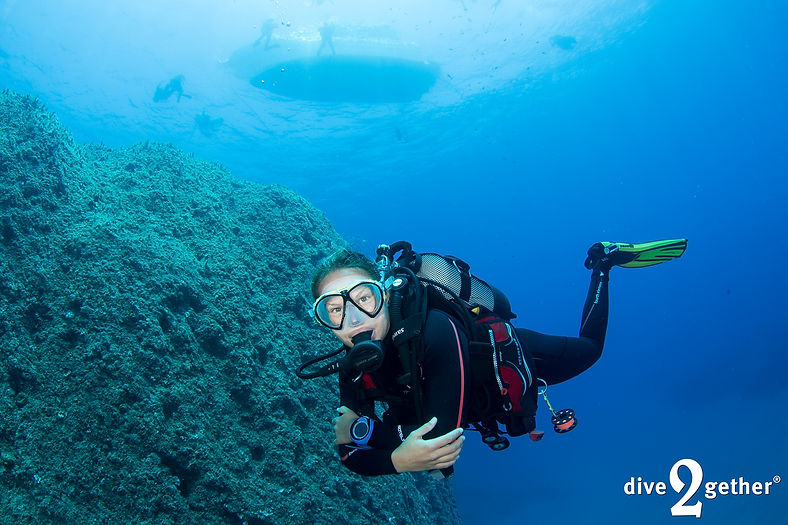
Black Rock est probablement l'un des sites de plongée en bateau les plus visités de notre sélection, car il offre quelque chose pour tous et ne déçoit jamais. Le rocher ressemble un peu à la pointe d'un iceberg. Il y a un grand récif à une profondeur de 3 à 7 mètres, puis le rocher descend abruptement jusqu'à environ 26 mètres du côté sud. La zone plus profonde est idéale pour observer de plus gros mérous et des poissons-lions.
Quelques lignes de pêche perdues sont réutilisées et attachées au fond avec une bouée juste sous la surface. Passe un peu de temps ici, car elles sont complètement recouvertes de mollusques, d'étoiles de mer plumeuses et d'hydropolypes qui attirent également les flabellines dans la zone. Si tu suis la formation rocheuse, tu te retrouveras dans un magnifique et grand canyon avec quelques fissures où de nombreux poissons cardinaux aiment se cacher. À l'extrémité de la gorge, tu peux souvent apercevoir de gros poissons scorpions ou des murènes. Après la gorge, tu peux te diriger vers le bateau et profiter d'un arrêt de sécurité sur le récif peu profond.
Profondeur maximale: 26 mètres (en s'éloignant du mur, il est possible de descendre plus bas)
Arrêt de sécurité: reste près du récif à une profondeur de 3 à 7 mètres

Willy's Wall
Dédié à Willem, le propriétaire (néerlandais) d'un magasin de plongée sur la plage d'Ammoudi qui a découvert ce site de plongée en premier. Il s'agit d'un récif situé à au moins 6 mètres sous la surface, avec un fond en pente d'un côté et une magnifique paroi verticale de l'autre, couverte de trous et envahie par la vie. Emporte une lampe torche et explore tous les recoins un par un pour découvrir la vie marine la plus riche. Parfois, on trouve au fond de grands poissons scorpions ou des mérous cachés sous les rochers. Ce récif naturel attire de nombreux groupes de poissons, tels que les demoiselles, qui profitent de la vue depuis le haut. Les labres ornés, particulièrement actifs ici au début de l'été pendant la période de reproduction, sont également très particuliers. Une plongée typique ici consiste à suivre le mur, puis à remonter en surface en nageant plus près du mur. Comme le site de plongée offre une grande diversité et toutes sortes de vie marine, nous aimons dire : le mur de Willy a tout pour plaire !
Profondeur maximale: 26 mètres
Palier de sécurité: juste au-dessus du récif, avec de grands groupes de demoiselles
Eye of the Tiger
Même si ce site de plongée est très proche de notre site voisin Duck Rock, le type de fond ici est complètement différent. Entre les grandes structures rocheuses, le fond est recouvert de petits rochers pointus. Abrité lors des jours de vent fort du nord, Eye of the Tiger est un endroit où l'on peut trouver des eaux calmes. Il se trouve dans une baie peu profonde, mais ce n'est pas tout.
En suivant le fond rocheux vers le sud, tu tomberas sur une énorme formation rocheuse qui mesure 10 mètres au sommet et plus de 40 mètres à son point le plus profond. Des deux côtés de cette grande formation, tu trouveras des plateaux à différentes profondeurs qui se succèdent comme un escalier vers le niveau inférieur. Tu peux faire ton palier de sécurité en te relaxant dans les eaux peu profondes baignées d'une belle lumière solaire. Les plongeurs aventureux peuvent entrer dans une petite grotte sous la surface et remonter à la surface à l'intérieur.
Profondeur maximal: plus de 30 mètres.
Palier de sécurité: profite de la baie peu profonde pendant que les minutes s'écoulent.


Turkish Delight
Turkish Delight offre un abri parfait contre le vent du nord et, même si de grosses vagues peuvent être observées en mer, cette baie bénéficie d'eaux calmes et bleu clair. Il existe deux itinéraires à suivre pour plonger ici, en fonction de la profondeur maximale du groupe. Les plongeurs plus expérimentés peuvent pénétrer dans une grande grotte, tandis que les autres peuvent plonger le long de la paroi au-dessus. Les deux groupes ne seront pas déçus par les énormes quantités de coraux Sunset Cup qui aiment vivre à l'ombre. En suivant le mur, tu finiras par voir un virage en U avec un escalier en colimaçon naturel qui t'amènera au plateau au-dessus du mur. Si des plongeurs ont visité la grotte, tu profiteras d'un agréable petit bain moussant avec des bulles d'air qui remontent à travers de minuscules canaux dans le plafond de la grotte. La baie est parfaite pour passer un peu de temps dans les eaux peu profondes afin de décompresser avant de retourner au bateau.
Profondeur maximale: 26 mètres (30 mètres en s'éloignant du mur)
Palier de sécurité: profite de la baie peu profonde pendant que les minutes s'écoulent.
Paligremnos Wall
Le mur de Paligremnos est visible depuis tout Plakias et constitue la pointe de la baie sur le côté gauche. Tout autour de la montagne de Paligremnos, tu trouveras des parois abruptes et lisses, et il en va de même pour ce site de plongée. Depuis le point d'amarrage du bateau, tu peux plonger vers l'ouest en suivant le côté le plus profond du mur. Tu pourras peut-être déjà apercevoir tes premières flabellinas, mais si ce n'est pas le cas ici, tu les trouveras certainement au retour, sur le plateau qui ressemble à un balcon au-dessus de la zone plus profonde. Les flabellinas se nourrissent d'hydropolypes, qui ressemblent à de petits arbres morts et sont très abondants ici. N'oubliez pas d'emporter ton appareil photo macro pour cette plongée ! Outre nos nudibranches rose vif préférés, il n'est pas rare de trouver la déesse grecque de la mer, l'un des plus grands nudibranches de la mer Méditerranée.
Profondeur maximale: 26 mètres.
Palier de sécurité: reste près de la paroi pendant le palier de sécurité et nage la dernière minute vers le bateau.


Souda Rock
À l'époque où Dive2gether était encore loin d'avoir atteint sa taille actuelle, la famille Koblens et son équipe plongeaient depuis la baie de Souda. En regardant vers le large, ils ont remarqué des rochers qui émergeaient de l'eau. Paul savait qu'un jour, il achèterait un bateau et s'attendait à ce que ce soit un site de plongée extraordinaire. Et il avait raison ! Souda Rock est à l'abri des courants occidentaux et se trouve à seulement quelques minutes en voiture du port. Il est devenu le premier site de plongée en bateau de Dive2gether. Le site de plongée comprend en fait plusieurs rochers. C'est un véritable terrain de jeu pour les plongeurs, avec des canyons amusants à traverser à faible profondeur. Sur ce site de plongée, il n'est pas nécessaire de faire un arrêt de sécurité sous le bateau, mais plutôt de rester près du récif et d'observer la forte densité d'étoiles de mer plumeuses en attendant que les 3 minutes s'écoulent. Les plongeurs plus expérimentés peuvent visiter le site appelé Moray Eel Rock, qui est toujours un endroit formidable à visiter car il est probable d'y apercevoir une murène.
Profondeur maximale: 27 mètres à Moray Eel Rock
Palier de sécurité: restez près du récif à 5 mètres et utilisez la dernière minute pour nager jusqu'au bateau.
Dragon's Nose
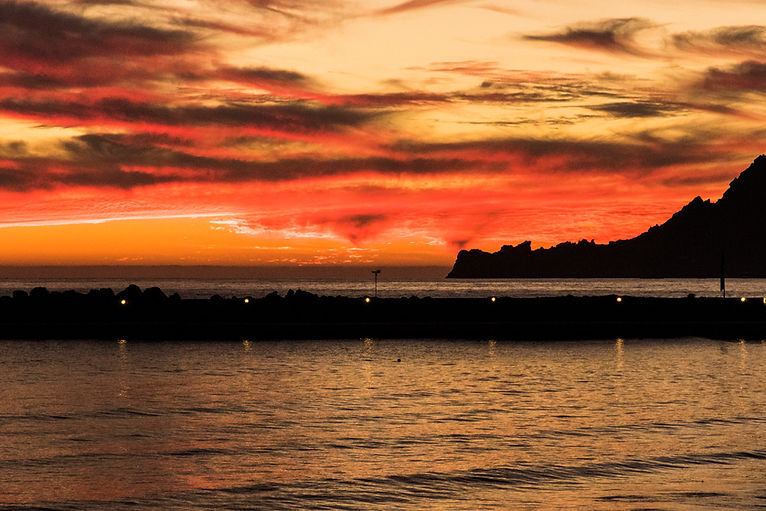
En regardant depuis la baie de Plakias, tu comprendras pourquoi cette formation rocheuse est appelée le dragon endormi de Plakias. Sous l'eau, la formation continue et donne l'impression que le dragon tire la langue. Ici, on trouve une baie naturellement protégée du vent d'ouest, ce qui est rare sur toute la côte sud de la Crète.
La baie est un peu moins profonde, mais tu peux suivre la « langue » du dragon pour atteindre des eaux légèrement plus profondes. En traversant la langue, tu pourrais tomber sur une fissure particulière qui est idéale pour observer des groupes de poissons cardinaux et d'écureuils. Ici, tu atteins le point le plus profond de la plongée. Tu peux garder le mur sur ta droite et, si tu as le temps, visiter l'étroite grotte rose, ou la narine du dragon si l'on s'en tient à l'histoire. Elle est recouverte d'algues roses et un magnifique rideau de lumière brille à travers une ouverture à la surface.
Profondeur maximale: 20 mètres.
Palier de sécurité: nager de la langue jusqu'au bateau ou avant d'entrer dans la grotte rose.
Dragon's Nose II
Lorsque tu vas à Dragon's Nose, tu peux aussi aller à Dragon's Nose II, qui est plus profond, pour éviter de faire deux fois la même plongée. Pour profiter au max de Dragon's Nose II, on te conseille de nager depuis le bateau et de descendre du côté sud de la « langue ». Tu y trouveras un gros rocher plus profond, souvent entouré de grands bancs de picarels, et les rochers et les parois sont percés de nombreux trous où se cache la vie marine. C'est un endroit idéal pour observer des nudibranches et des murènes. Ne te laisse pas trop distraire par toute cette vie fascinante et n'oublie pas de surveiller ton temps de décompression et ta réserve d'air !
Profondeur maximale: 27 mètres
Palier de sécurité: nager de la langue jusqu'au bateau
Doggy Rock Bay
On peut débattre du fait que cette structure rocheuse ressemble au nom qui lui a été donné, mais lorsque tu plonges ici, tu ne sais jamais ce que tu vas trouver. En raison des nombreux niveaux différents et de la proximité de la mer ouverte, tu peux être surpris par de gros poissons ou même des raies qui passent. En gardant les yeux rivés sur la paroi, tu verras plein d'étoiles de mer à plumes, de gros oursins à épines et, si tu as l'œil pour les détails, tu pourras aussi repérer des nudibranches. Le point fort de ce site de plongée est la vue sur la profondeur qui descend bien plus bas que ce que les plongeurs récréatifs peuvent visiter. Sur le chemin du retour, tu peux suivre le mur à la profondeur que tu souhaites et même passer un peu de temps en eaux peu profondes dans la petite baie, une zone rocheuse envahie par la végétation, où vit un magnifique et grand ver tubicole spiralé.
Profondeur maximale: 30+ mètres
Palier de sécurité: profite de la baie peu profonde pendant que les minutes s'écoulent

Doggy Rock Drop
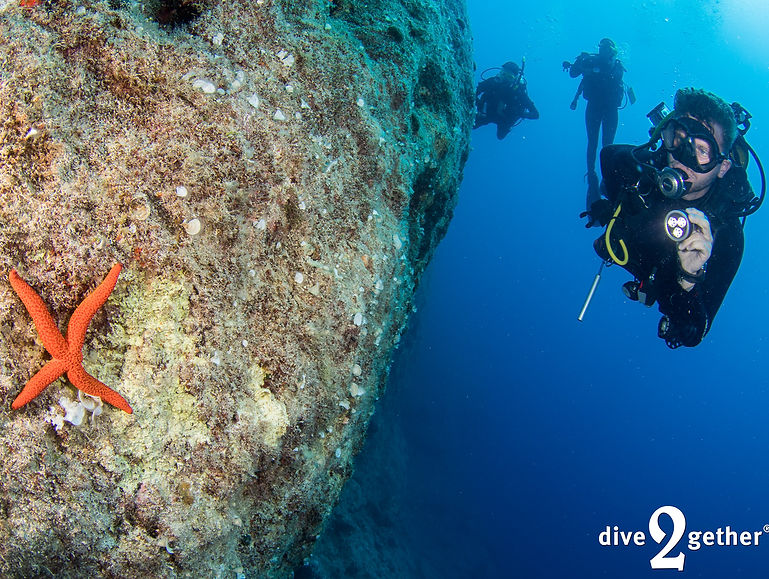
Voisin du site de plongée Doggy Rock Bay, ce site est situé un peu plus près du grand tombant et à l'abri des vents forts du nord. Les jours de vent fort, il peut sembler très calme ici, mais ne te laisse pas tromper. Tu peux être surpris par un courant sous-marin dans la direction opposée à celle à laquelle tu t'attends, alors planifie ta plongée ici avec prudence. Le paysage de ce site de plongée est magnifique et rappelle les scènes du film Le Seigneur des Anneaux. N'oublie pas de jeter un œil de temps en temps loin du mur, tu pourrais être surpris par de gros poissons chasseurs qui passent, comme le dentex ou l'un des plus gros mérous. Les plongeurs avancés peuvent plonger sous le grand surplomb qui surplombe la grande dénivellation partagée avec le site de plongée voisin. Ensuite, un chemin te ramène au plateau où quelques formations rocheuses te permettent de passer un moment agréable en nageant vers le bateau.
Profondeur maximale: 30+ mètres
Palier de sécurité: suspendu sous le bateau
Grand Gate
Grand Gate tire son nom de son apparence, qui ressemble à une grande arche au-dessus de la surface, qui se prolonge sous l'eau et forme une grande porte que l'on peut traverser à la nage. Le bateau est amarré devant la petite baie, au-dessus du fond de 17 mètres de profondeur. De là, tu peux te diriger vers le tunnel, soit en passant d'abord un peu de temps sur la paroi extérieure, soit en plongeant directement à travers. La porte est suffisamment grande pour que tous les plongeurs puissent y entrer simultanément et, dès l'entrée, la sortie de l'autre côté est déjà visible. Cela crée une vue impressionnante, avec la lumière du soleil qui pénètre de l'autre côté. Des deux côtés de l'arche, les plongeurs peuvent s'adonner à leur passion. De nombreux rochers qui ont dû tomber de la haute côte créent de petits passages et des surplombs. Dans la baie du côté est, tu trouveras de nombreux animaux sessiles, ce qui fait de ce site un endroit idéal pour notre activité de biologie marine « Caché à la vue de tous ».
Profondeur maximale: 19 mètres
Palier de sécurité: nage à 5 mètres de profondeur depuis la baie vers le bateau et termine le palier à cet endroit.


Fisherman's Friend
C'est le site de plongée le plus éloigné en bateau. Il tire son nom du fait que la zone est très prisée des pêcheurs, car elle est proche des grands fonds marins et que l'on trouve souvent des filets de pêche aux alentours. Garde les yeux rivés sur l'horizon lorsque tu te détends sur le bateau, car il n'est pas rare que de grands animaux marins viennent faire surface ici, loin des côtes. Une fois descendu sur le plateau à 15 mètres de profondeur, tu peux commencer une excellente plongée le long du tombant. Emporte une lampe torche pour observer la faune marine abondante qui se cache dans les crevasses et les surplombs. À l'est du bateau se trouve une structure en forme de gorge. Passe cette gorge et tu trouveras une éponge oreille d'éléphant, l'une des plus grandes que l'on puisse trouver en Méditerranée. Lorsque tu plonges le long du tombant, garde un œil sur le bleu profond, car nous avons observé à plusieurs reprises des raies pastenagues et des mérous de grande taille dans cette zone.
Profondeur maximale: plus de 40 mètres
Palier de sécurité: suspendu sous le bateau. Fais attention à ne pas dériver !
Papadoplaka
Le dernier site ajouté à la liste des sites de plongée Dive2gether, et qui n'a pas encore été entièrement exploré, est Papadoplaka. Papadoplaka signifie « le rocher du prêtre » en grec. Ce nom lui a été donné car il se trouve à seulement un mètre sous la surface, ce qui en fait un endroit dangereux pour la navigation, même s'il s'agit d'un site de plongée magnifique. Une rumeur raconte qu'autrefois, un bateau n'a pas réussi à éviter ce plateau sacré et a coulé. Bien que nous l'ayons cherché, nous n'avons trouvé aucun morceau d'épave, mais nous sommes tombés amoureux de ce magnifique site de plongée. Le fond étant trop profond pour y installer un mouillage, la visite de ce site de plongée n'est possible qu'avec un bateau à la dérive. Tu peux t'équiper à l'amarrage de la Grande Porte, prendre un taxi jusqu'au site de plongée et commencer au gros rocher où tu seras accompagné de nombreux poissons demoiselles. Peu de gens ont plongé à cet endroit, donc si tu y vas, tu feras partie des rares explorateurs de Papadoplaka.
Profondeur maximale: 19 mètres
Palier de sécurité: suis le mur à 5 mètres et nage en milieu d'eau jusqu'au bateau.


Elephant Rock
Tout comme Dragons Nose II, ce site de plongée partage sa ligne d'amarrage avec le site voisin, en l'occurrence celui de Paligremnos Wall. Si tu ne sais pas pourquoi cet endroit s'appelle Elephant Rock, demande à ton capitaine de t'y emmener en bateau et de te le montrer. Il ne faut pas beaucoup d'imagination pour reconnaître la forme d'un éléphant, avec un œil et une trompe qui s'enfoncent dans l'eau et ressortent, comme si l'éléphant était prêt à faire quelques éclaboussures. La principale caractéristique de ce site de plongée est la caverne spacieuse que l'on peut découvrir en suivant le mur. Après avoir passé un certain temps ici, tu voudras peut-être aller encore plus loin et repérer d'anciens rails qui faisaient partie d'un projet d'exploitation de lignite datant de nombreuses années. Comme dans beaucoup d'endroits, il est courant de rencontrer des poissons-lions ici, mais sois prudent car ils semblent être un peu plus effrontés dans cette zone que dans d'autres sites de plongée.
Profondeur maximale: 19 mètres.
Palier de sécurité: reste un moment près de la paroi à 5 mètres et nage la dernière minute de ton palier vers le bateau.
Partagez tes souvenirs
Lequel de ces sites de plongée est ton préféré ? On aimerait beaucoup que tu nous racontes tes meilleurs souvenirs de plongée ici !